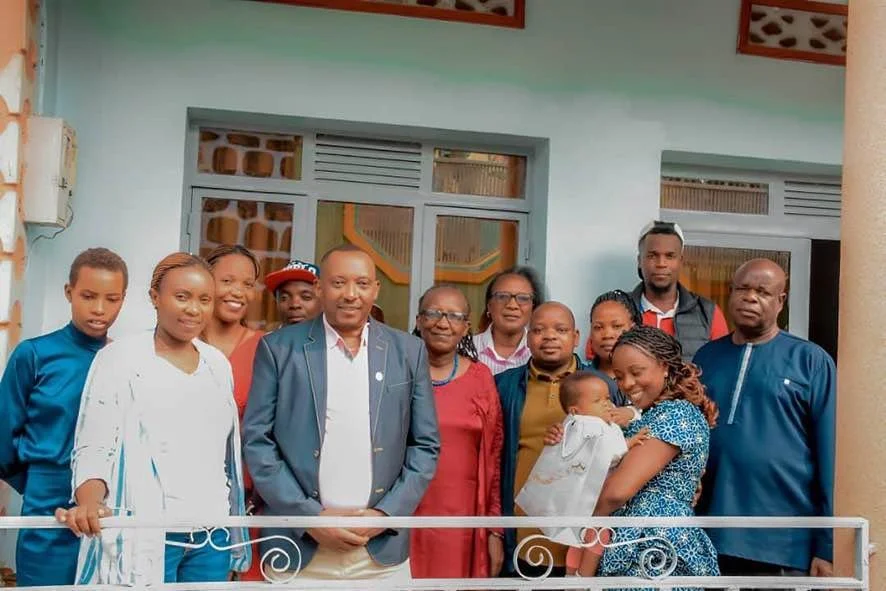
Godefroid Seminega
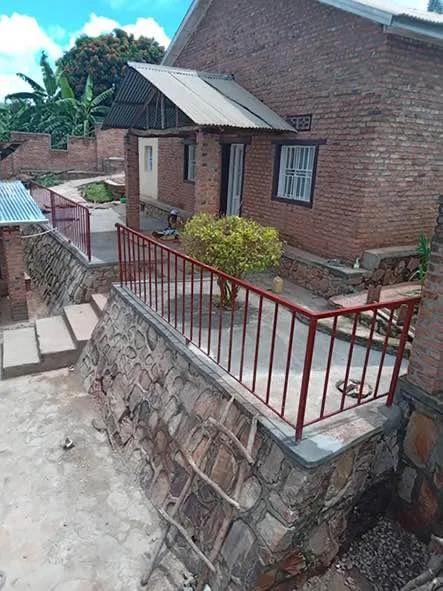
Godefroid grew up in Gatungo, Ngarama a village in the northeast of Rwanda, after school he studied for 7 years to become a medical assistant, “I was head of a new health centre near my village for one year and then I went to University in Zaire, now Democratic Republic of Congo.”. After studying he returned to Rwanda where he worked on HIV research, focusing on HIV transmission between mothers and babies for Johns Hopkins University and National University of Rwanda.
In April 1994 the genocide against the Tutsi forced the research project to close. It’s estimated 1 million people were killed and up to 250,000 women were raped in just 100 days [1], “When the genocide started, they put roadblocks everywhere and militias would go house by house to kill people. If they don't know you, they ask for your ID card. If you’re Tutsi, they'll kill you. I was very lucky because I was living in the South of country where people didn’t know me.” He adds “Most of the people who are Tutsi from my region, they change the ID card to mention they are Hutu.” He escaped to the Democrat Republic of Congo with his son and ex-wife, returning once rebel forces had taken control.
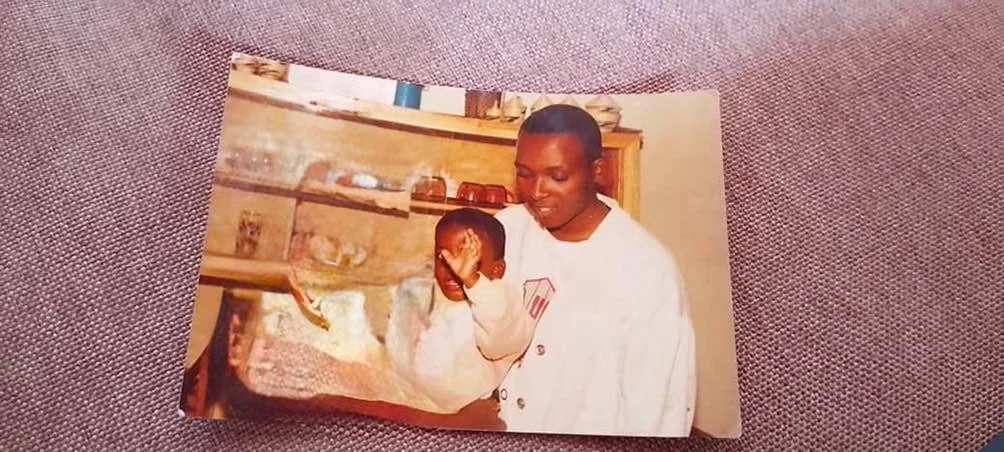
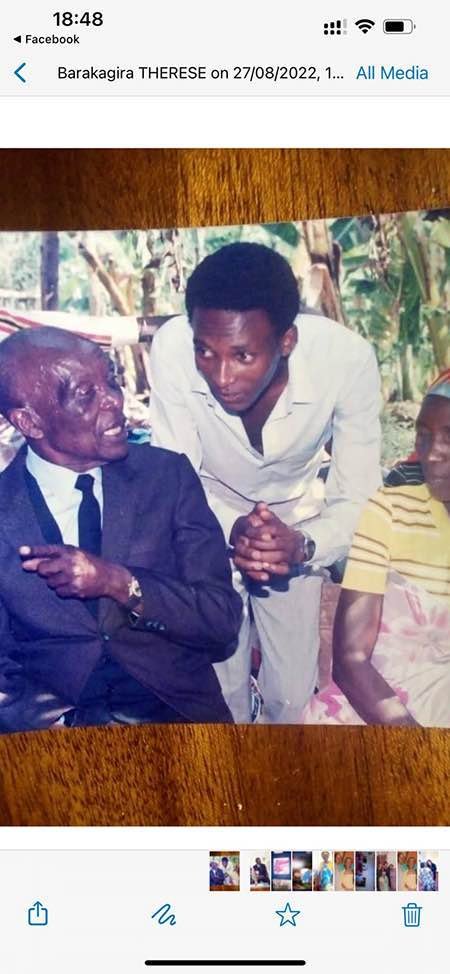
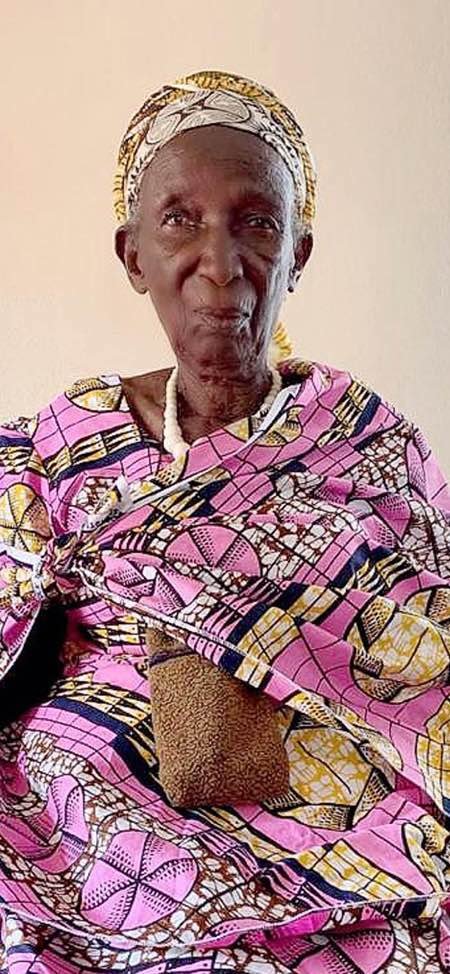
Godefroid with his son August Minega in Butare (Huye), Rwanda, 1994
After the genocide Godefroid continued to work in healthcare, teaching nurses and then in 1998 came a new opportunity, “ I was lucky to get a scholarship. I went to Belgium, to Free University of Brussels School of Public Health to study public health” Afterwards he returned to Rwanda in 2002 and worked as a public health advisor for the Swiss Tropical and Public Health Institute, but for political reasons it was no longer safe for him so in 2004 he fled to the UK. His ex-wife and three children had also moved to the UK for their safety.
Godefroid arrived in London, claimed asylum and found himself in difficult circumstances, “ I was begging to get a bus pass to go to see my solicitor in North London. I saw how the [asylum] system was very hostile and the policies make people become destituite, ’cause you know, we are not allowed to work and when we were in emergency accommodation we were not given money at all.”. During this time he was sharing a double bedroom with up to four other asylum seekers.
Fortunately his asylum claim was processed quickly, and he moved to Stoke shortly afterwards. He started work for the Primary Care Trust, working with BME communities. He enjoyed the pace of life in a smaller city,” London is a crowded city. I didn't like London because it was very, very busy.”. After starting a new job working for a local NHS Trust he applied for council housing, “When I spoke to my friends, they said, ‘No, no, no, no, don't go. Don't go, it's in a racist area.” But Godefroid decided against this advice and moved into his new flat.
One night he had a knock on his door from an older English neighbour, “ There's a water leaking from your kitchen to the lady's bedroom downstairs.’ The man said’ Godefroid remembers, “I went to open the kitchen, there's, water everywhere, flooded. It was 2am, I didn’t know what to do. He said, ‘Don't worry, I'm going to get tools in my house. Go back and sleep. I know you go to work every morning.” Whilst Godefroid slept the leek was partly fixed with a note asking him to leave his key to the older man so the council could return to fix the leek, " I came back from work, five o'clock already, people from council, they came and fixed everything in my house and the old man gave back my key. This is a place I've been told that was a racist area.”
“When my sons moved from London to live with me, the old English man showed me a good school nearby for my son Robert, my son was the only black student and became Head Boy."
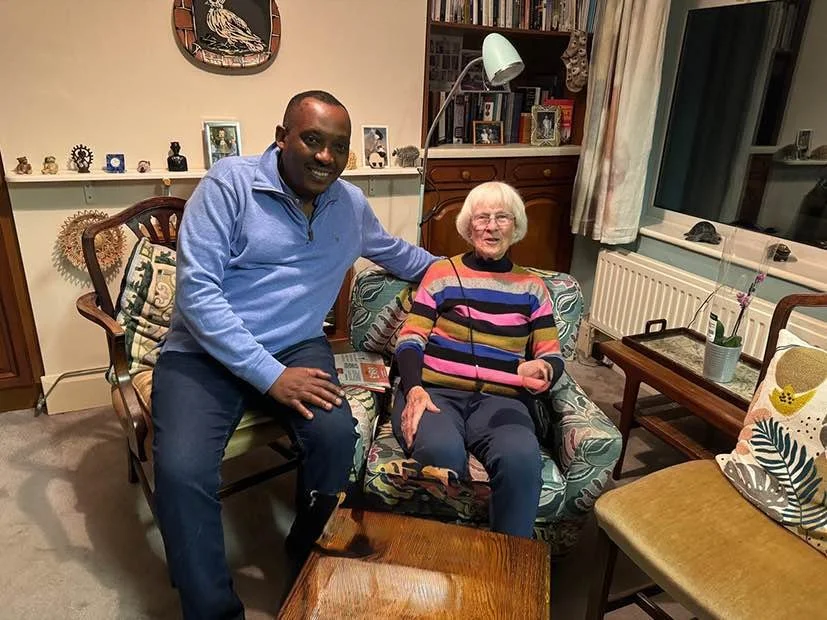
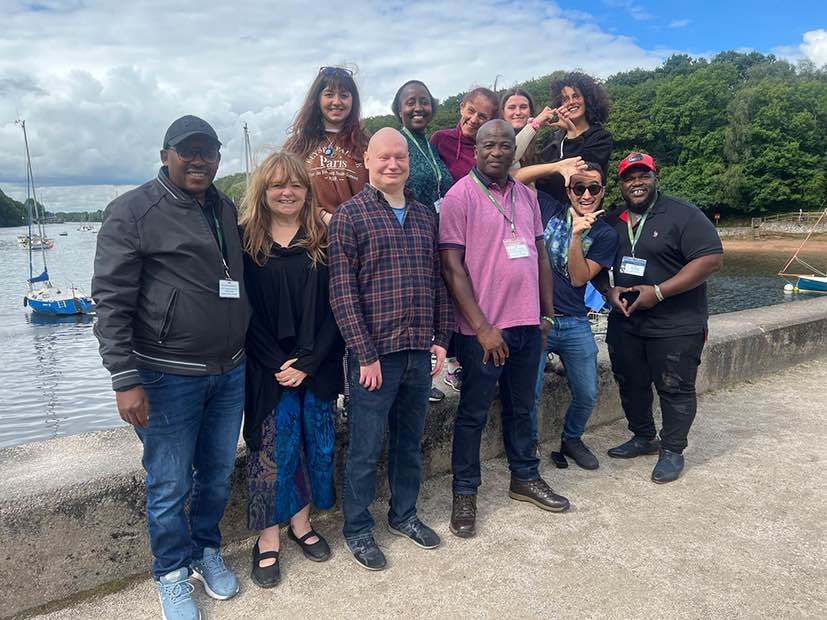
Godefroid visiting Angela Glendenning, one of cofounders of Asha North Staffordshire charity at her home, Newcastle-under-Lyme, 2021
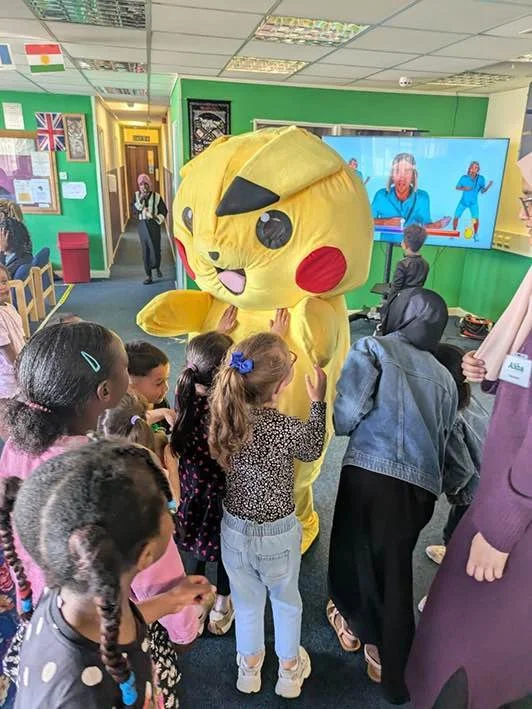
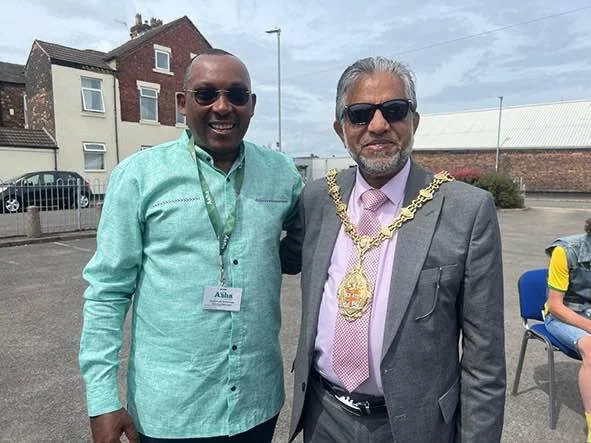
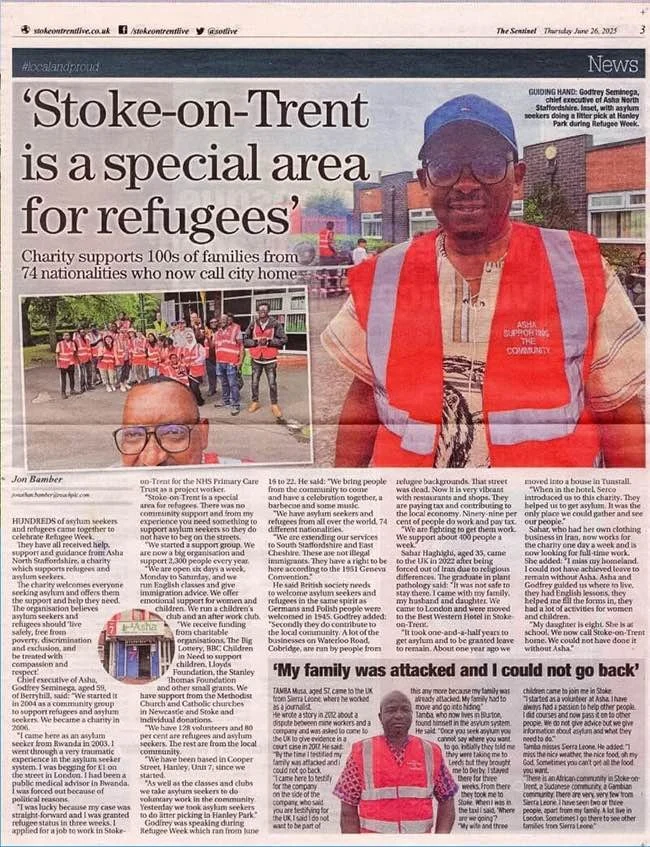
In 2005 with co-founder Angela Glendenning and others, Godefroid set up Asha, a charity that provides services and social activities for asylum seekers and refugees in North Staffordshire. The charity initially began in a small terrace house after Godefroid and others realised there was limited provision for displaced people locally. Since then the charity has grown to support over 2,500 people last year, with over 120 volunteers, “ Half of them are asylum seekers and the other half are people from the local community.” Godefroid explains.
Asha provides many services including: social activities, information on the local area, guidance on the immigration process, a food bank, and English classes, “We do a quick assessment to anyone who may have any special need in terms of mental health, language or social isolation. Then we refer them to different clubs we run here, [.] so we are open from Monday to Saturday, and we see around 600 people a week.”.

Asha football team winning the Derby Refugee Week Football Tournament, 2025
There have been challenges though, as he believes attitudes towards asylum seekers have changed since Brexit, “Before we used to have one or two cases of racial discrimination, but they were very, very isolated cases, you know. But now even myself, I don't feel safe to go and walk on the street. When I do a walk near my house, I can't do it in the evening. I make sure that when I go there are many people in the park walking, otherwise I will not go there.”.
Asha also has published a statement in response to the hostile attitudes against refugees, “They're not here for benefit.” Godefroid explains, “They're here because they need a safe place to live. Nobody chooses to come to live in England if there's no good reason to come. Myself I had a very good job, a dream job. I’ll never get back in my life and I don’t think I can get it here.”.
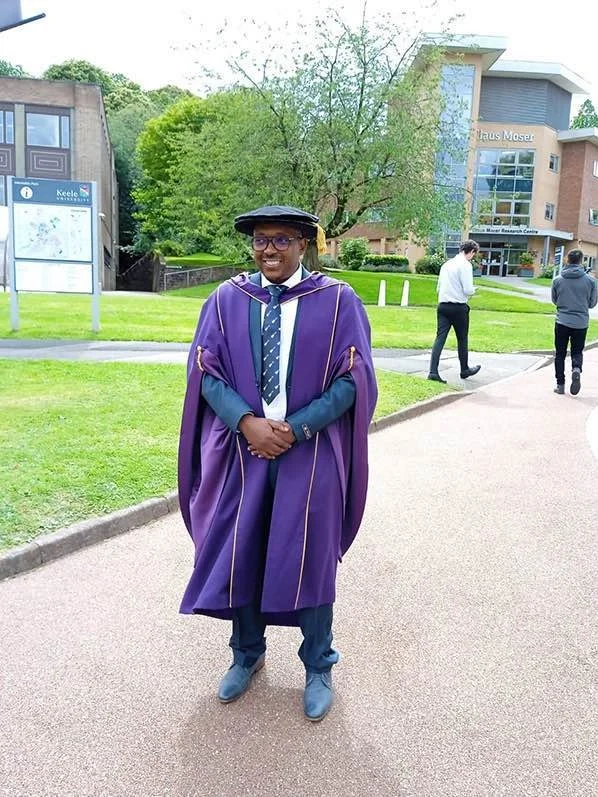
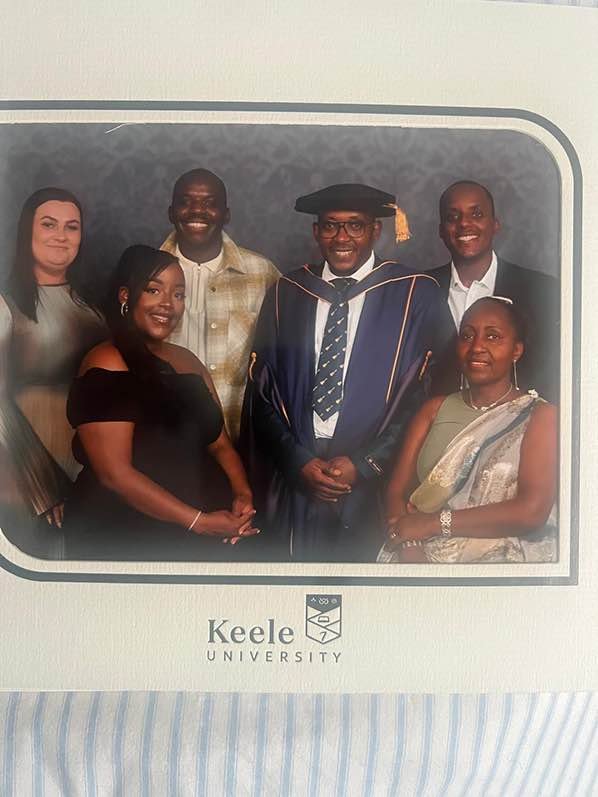
Godefroid in his higher doctorate gown attire, Keele University, 2023
There have been moments of celebration too. In 2023 he was rewarded with an honorary degree at Keele University for his work in promotion of social inclusion for refugees and asylum seekers in North Staffordshire. Reflecting on the day he said, “I feel honoured to be honest. Education is a strong weapon to change the world. You know, I want students to go out and try to support vulnerable people and to join our campaign for a better society, an equal society.” Godefroid hopes to retire in the near future, but is keen to see Asha continue to grow and support more people seeking asylum.
[1] https://www.un.org/en/preventgenocide/rwanda/supporting-survivors.shtml